Orkut, launched by Google in 2004, was one of the earliest social networking sites to make a significant impact, especially in Brazil and India. Despite its eventual decline, Orkut played a crucial role in shaping the landscape of online social interaction and offering valuable lessons for future platforms.
The Beginning of Orkut and Its Unique Features
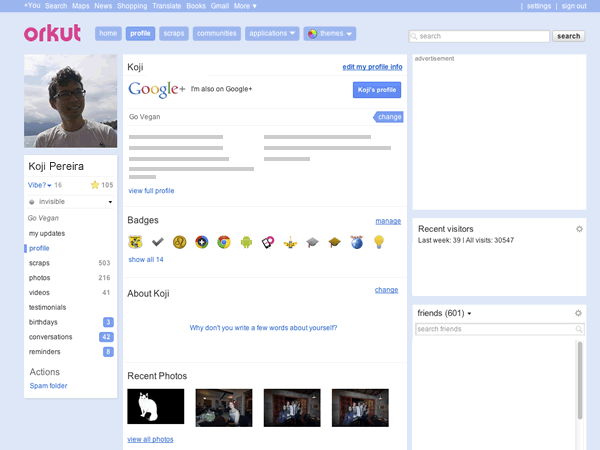
Orkut started with a focus on community-building, allowing users to find and join groups based on shared interests such as hobbies, schools, and workplaces. Its early success was driven by its invitation-only model, which created a sense of exclusivity and trust among users (Mahoney & Tang, 2017). During its peak, Orkut boasted approximately 30 million active users, dominating the social media space in Brazil and other countries for several years.
What Set Orkut Apart? Privacy and Community Focus
One of Orkut’s most praised features was its emphasis on user privacy. Unlike many of today’s platforms, Orkut prioritized protecting user data and limited intrusive advertising. Users could recommend products and services within groups, fostering trusted community interactions rather than relying solely on ads. This privacy-first approach made it an attractive option for users wary of data breaches (Mahoney & Tang, 2017).
Impact on the Brazilian Market
Brazil became one of Orkut’s strongest markets, with the platform influencing online shopping behaviors. A significant portion of Brazilian social media users relied on platforms like Orkut for product research and trusted peer reviews, which enhanced local online retail businesses. The social connections fostered on Orkut contributed to a positive attitude toward online shopping and brand engagement (Mahoney & Tang, 2017).
Challenges and the Platform’s Decline
Despite its initial success, Orkut faced challenges that contributed to its decline. Its limitations, such as restrictions on the number of friends and technical issues in sharing photos, failed to keep pace with evolving user expectations. Moreover, the platform’s exclusivity regarding invitations limited its accessibility and growth. As competitors like Facebook introduced more dynamic features—such as instant messaging, multimedia sharing, and open registration—Orkut struggled to adapt (Mahoney & Tang, 2017).
Lessons Learned and Future Implications
Orkut’s story illustrates that social media platforms must continuously innovate and adapt to changing user needs to remain relevant. Privacy, user engagement, and technological flexibility are critical components of success. Its early approach to community-building and privacy set the stage for future social networks to prioritize user trust and targeted marketing strategies.
Conclusion
Although Orkut is no longer active, its influence persists in how social networks are designed and marketed today. Understanding its history offers valuable insights into the importance of adaptability, privacy, and community-focused features in building lasting online social platforms.
References
Mahoney, L., & Tang, T. (2017). Strategic social media: From marketing to social change. Wiley-Blackwell.


Leave a Reply